 Ask our AI colleague Milly
Shared context
Organize the knowledge a chosen task needs, including its sources, owners and update process.

Perpetuum builds an internal company brain that AI can work with: an AI assistant and AI agents that use your own documents, tools and processes. We call that a Company OS. We set it up and stay involved in running and improving it.

The answer lives in a document, a past decision or someone’s head. Your team spends time piecing it together. Start by connecting the knowledge behind one recurring task.
We agree the scope around your starting point. These are the building blocks.
Organize the knowledge a chosen task needs, including its sources, owners and update process.
Connect that context to an assistant or agent that supports a clearly defined piece of work.
Test answers on real examples. Agree who reviews them and keeps the knowledge current.
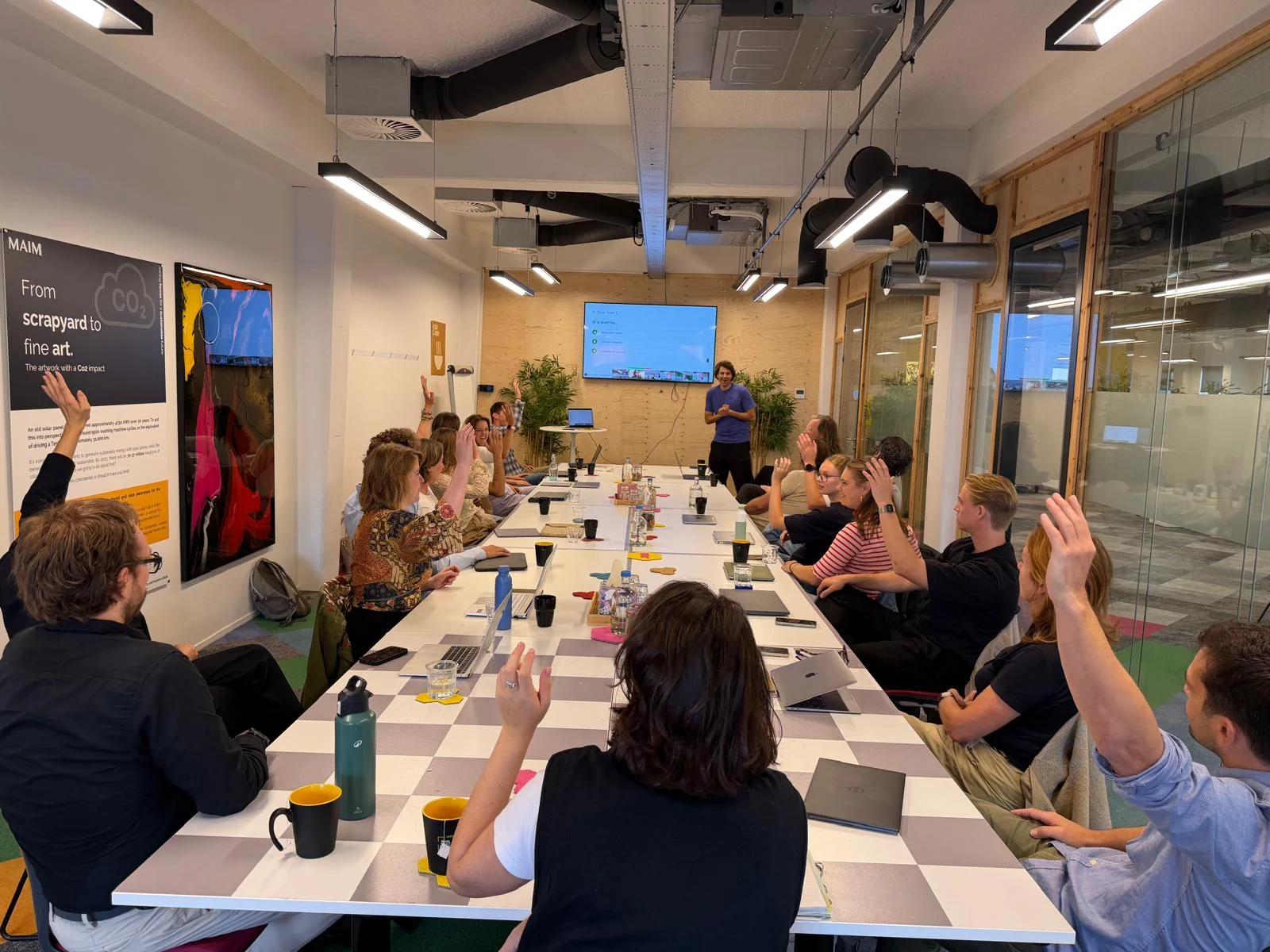
Together with GoodUp, we built a shared knowledge structure and a reviewed route for bringing new insights into its AI company brain.
Read the case
Our AI partnership with Tradin Organic connects processes and tools across Finance, QA and Logistics. See how we approach workflows in everyday operations.
Read the caseAn assistant could bring together approved account notes, past decisions and relevant documents into a draft briefing. Your colleague checks the sources, fills any gaps and decides what to use.
Choose a task, its owner and what a useful result looks like.
Understand the information, decisions and exceptions involved.
Work with real examples. Compare the output with what you need.
Agree review, ownership and how to learn from daily use.
We start with a defined use case, available information and clear access boundaries. Connecting knowledge does not make every answer correct; review and ongoing ownership matter.
Let’s talkA Company OS connects company knowledge, tools and AI agents around daily work. At Perpetuum, it is an approach to building shared context and practical workflows, shaped around the organization.
The starting point is your existing work and information. We first map what is already useful, where context is missing and who owns it. The right setup follows from that work; it is not a fixed software package.
Choose one recurring task where finding or combining knowledge takes time. Agree what a useful answer looks like and use real examples to test it before widening the scope.
Define who can use each source, what the system may do and which outputs need review. Assign someone to own the workflow and update the underlying knowledge. The exact controls depend on the chosen systems and use case.


Bring a question, an idea or a task you want to improve.
Or email Milly with a question